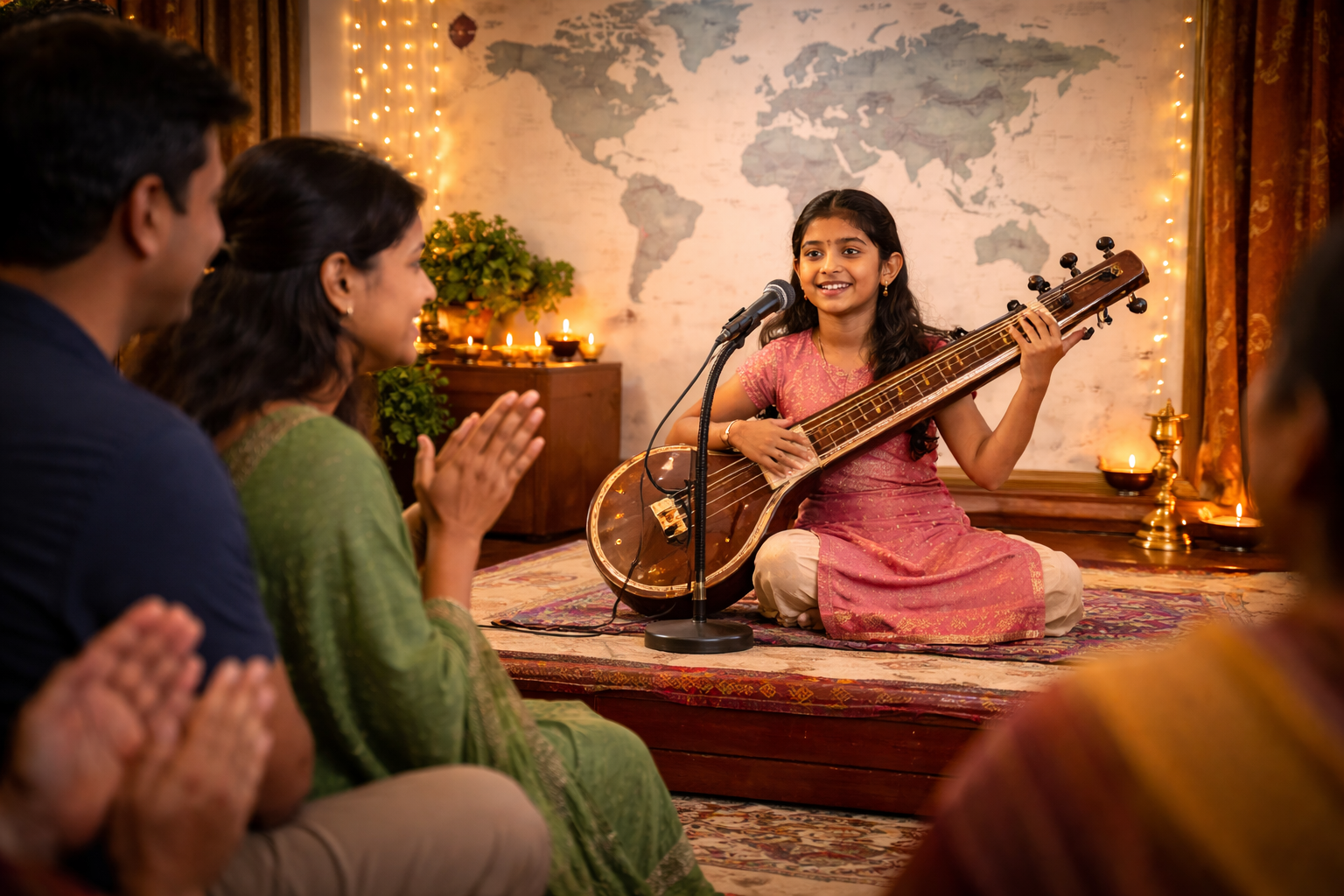
Learning Indian classical music begins with understanding ragas. Each raga has its own unique emotion, structure, and mood. Starting with the right ragas helps beginners develop strong vocal techniques and improvisation skills. Practicing ragas regularly enhances voice control, tonal accuracy, and melodic creativity. Additionally, it improves listening skills, attention to rhythm, and the ability to convey emotion through music, laying a solid foundation for advanced musical learning.
1. Raga Yaman
Raga Yaman is an evening raga that introduces beginners to melodic flow and swar patterns. Practicing Yaman helps in mastering long phrases and improvisation techniques. This raga emphasizes smooth transitions between notes and encourages students to explore subtle gamakas (ornamentations). Performing Yaman regularly develops breath control, melodic precision, and the ability to sustain notes with clarity. Many learners also find that Yaman helps in cultivating emotional expression and serenity in their singing.
2. Raga Bhupali
Bhupali is a pentatonic scale raga. Its simplicity and beauty make it ideal for beginners. It builds vocal confidence and helps in understanding the basic swaras. Bhupali teaches learners how to maintain melodic consistency while exploring improvisation. Practicing Bhupali improves tonal recognition, rhythmic timing, and the ability to execute precise note sequences. This raga is also excellent for group practice sessions, as it encourages harmony and pitch alignment among learners.
3. Raga Hamsadhwani
Hamsadhwani is a joyful raga, great for exercises and strengthening vocal pitch control. It is often used to conclude concerts due to its uplifting nature. Singing Hamsadhwani helps learners develop agility in vocal transitions and improves the ability to handle fast-paced musical phrases. This raga encourages experimentation with tempo and ornamentation, making it a favorite for learners to showcase technical skill. It also builds stamina and precision in both solo and ensemble performances.
4. Raga Desh
Desh is a monsoon raga. It helps learners explore emotive singing and mood expression. It’s excellent for developing emotional depth in vocals. Practicing Desh enhances the ability to convey feelings through pitch modulation, microtones, and rhythmic variation. This raga challenges learners to interpret melodies with subtlety and sensitivity, improving musical intuition. Regular practice in Desh also develops a connection between technical mastery and artistic expression, making performances more soulful.
5. Raga Kafi
Kafi raga introduces learners to light classical expressions and folk elements. It helps bridge classical and semi-classical singing styles. Kafi encourages experimentation with semi-classical ornamentations and improvisation techniques. Practicing this raga enhances flexibility in handling both structured compositions and creative improvisations. Additionally, Kafi helps learners develop a sense of melody that blends classical rigor with the spontaneity of folk traditions, making it ideal for versatile singers.
By mastering these foundational ragas, students at Ragga Rhytham gain the confidence and skill to explore more advanced ragas and develop a rich musical repertoire. With consistent practice, learners enhance their vocal range, expressiveness, and improvisational abilities. These ragas also provide a gateway to understanding rhythm, tala patterns, and the nuances of Indian classical music, ensuring a comprehensive and enjoyable learning journey.